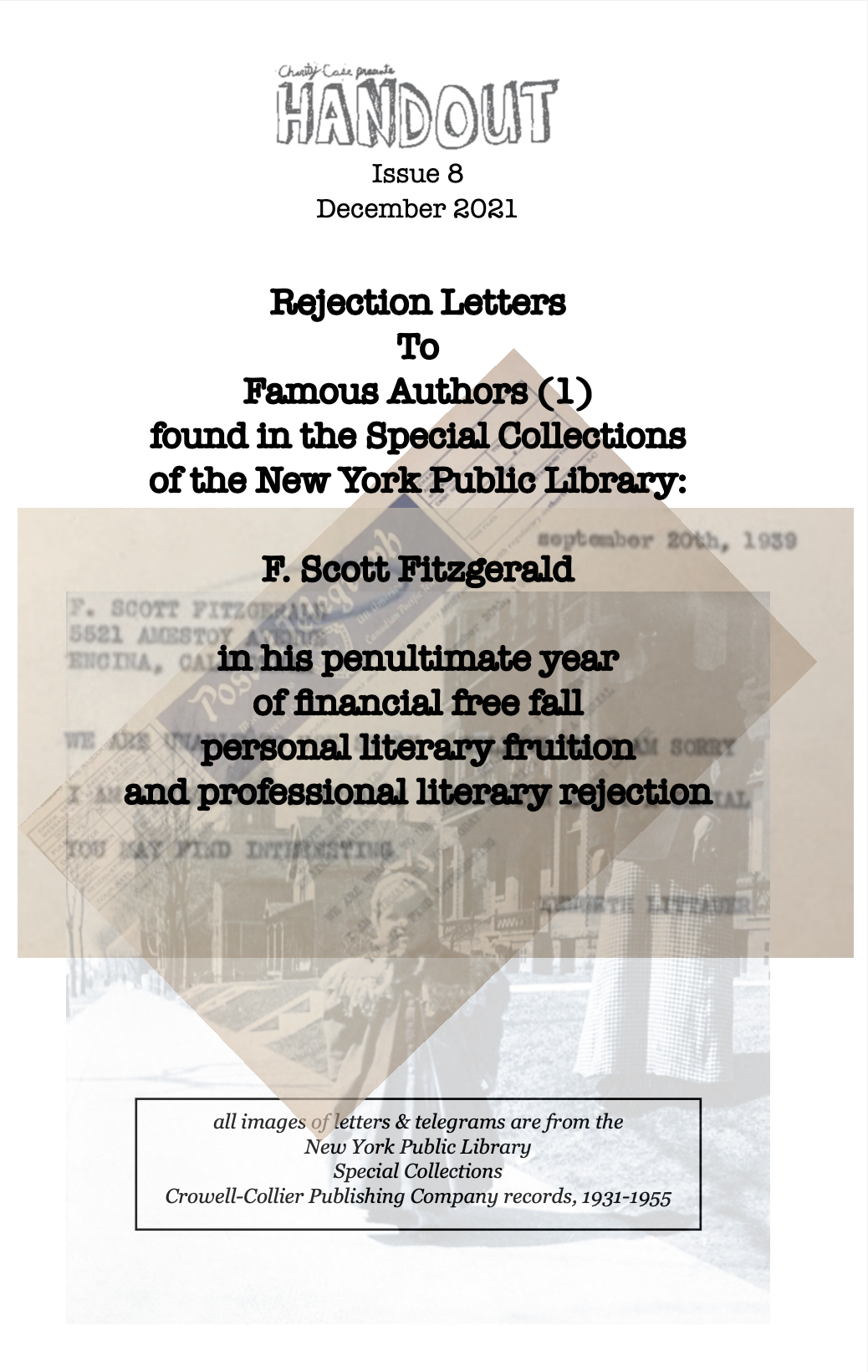
Rejection Letters
To
Famous Authors
found in the Special Collections
of the New York Public Library
issue: 1
:
F. Scott Fitzgerald
in his penultimate year
of financial free fall
personal literary fruition
and professional literary rejection
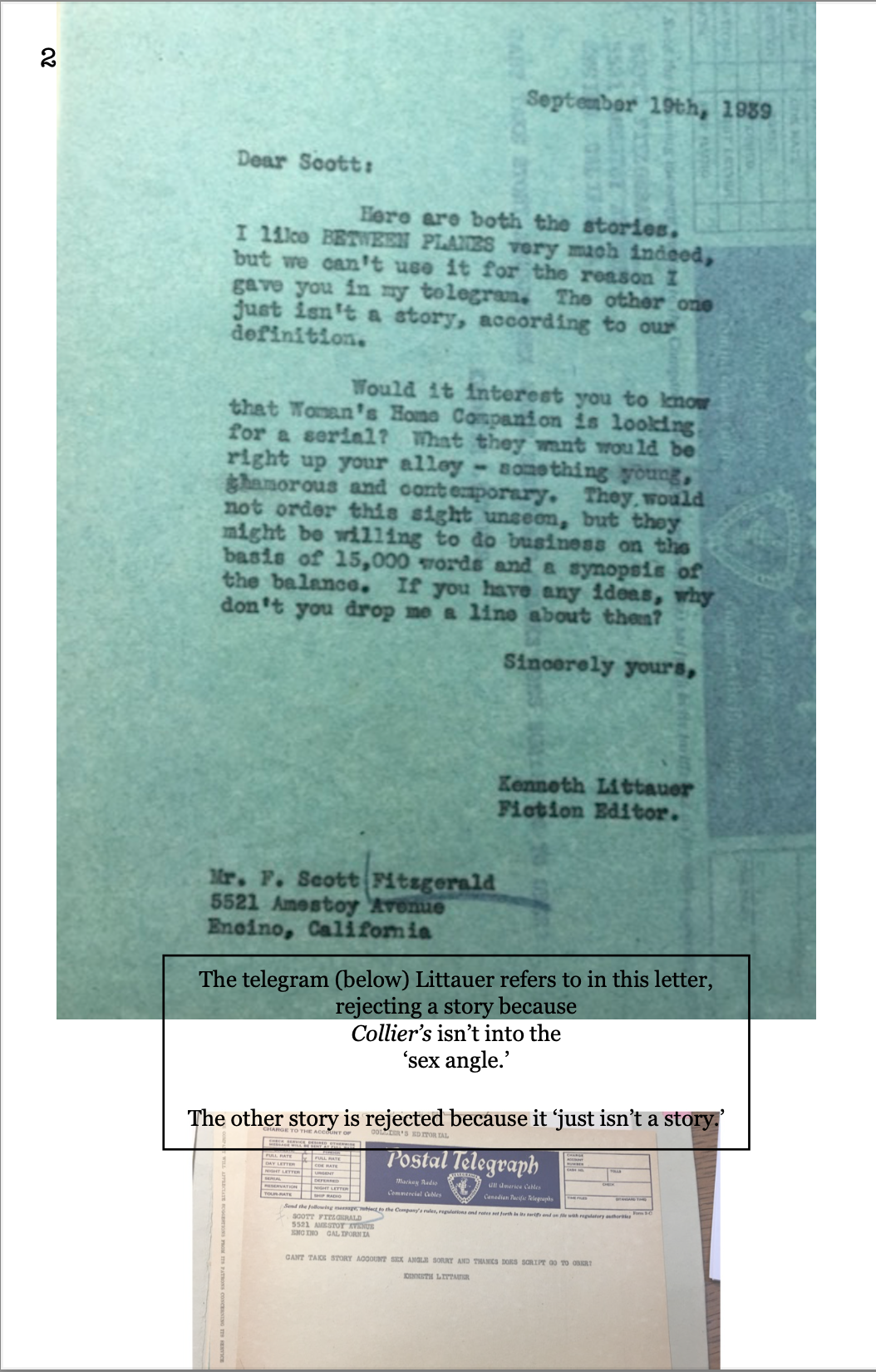
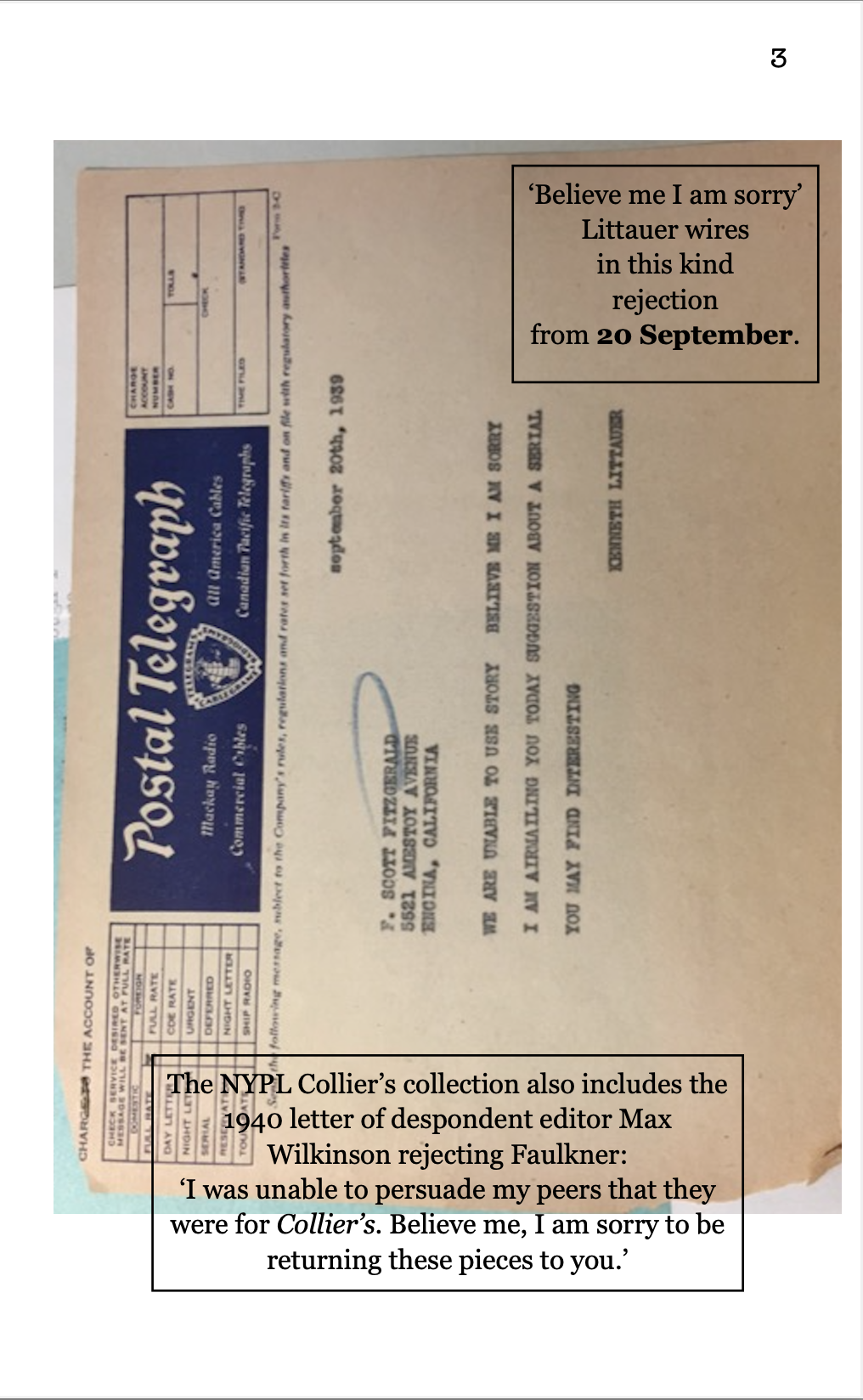
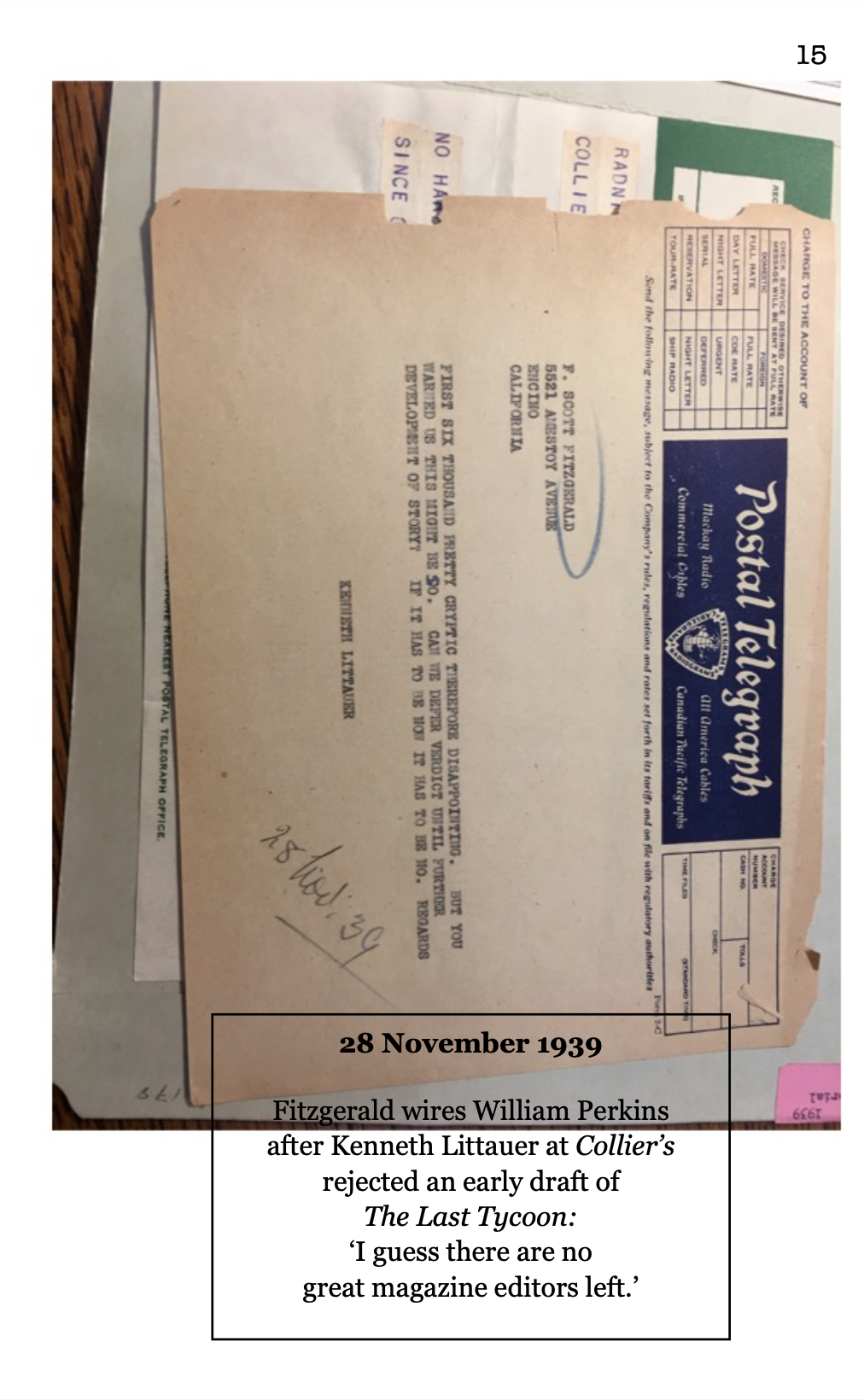
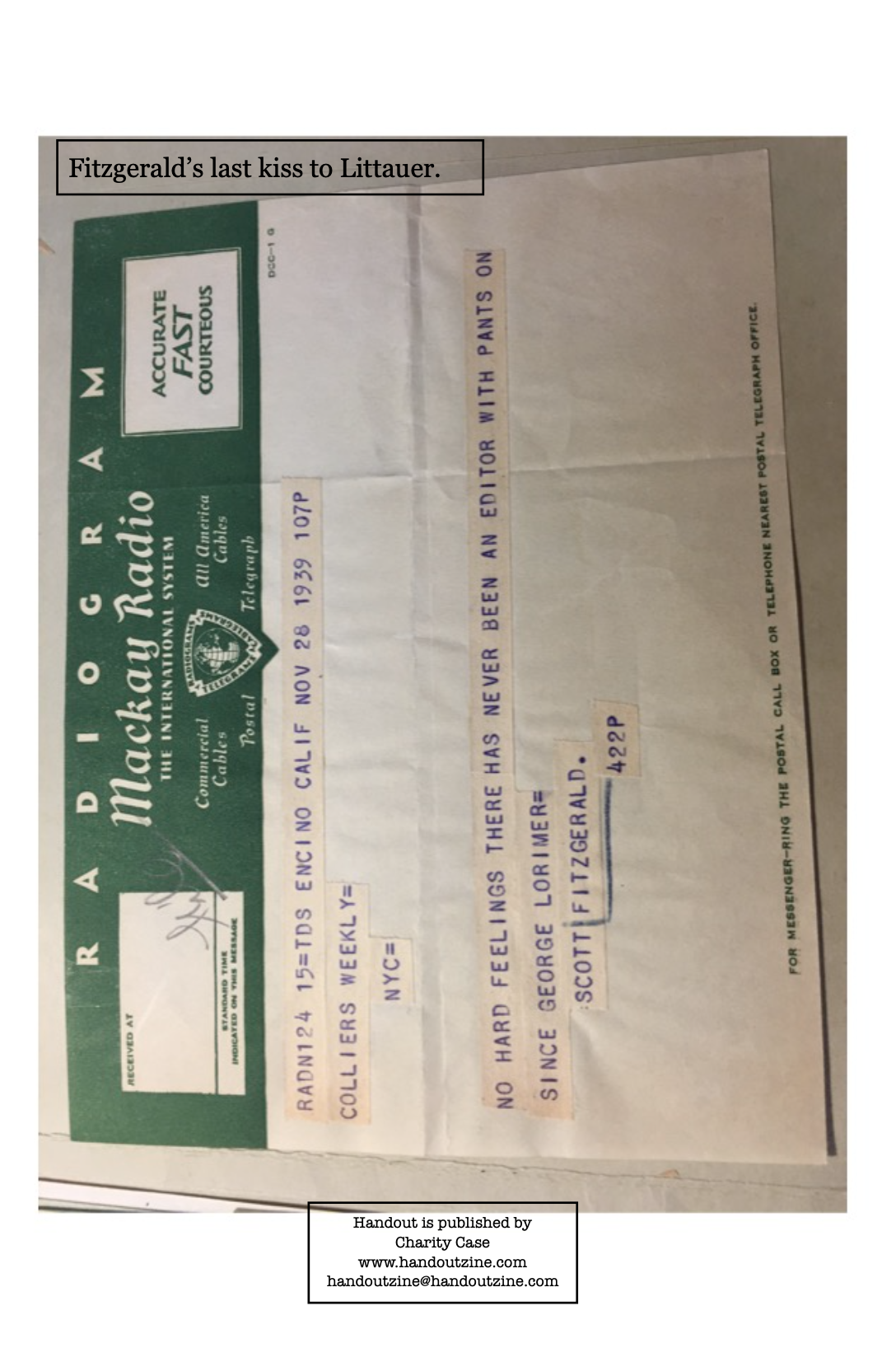
![page 4 letter to Otis A. Kline from the Fiction Department. text: On 21 September 1939 Fitzgerald telegraphs his daughter ‘You can register at Vassar. It cost a hemorrhage.’Fitzgerald’s desperate need for money in his last years is well known, and colors all of his correspondence. In this letter from 26 September another story
‘The Pearl and Fur’
is rejected by
Otis Kline. In a 19 September letter to Harold Ober, he had written that he ‘can’t possibly pay [his daughter’s] Vassar tuition of $615.00. I’m working today on an Esquire story to get her back [t]here.’ In the same letter he referred to working in Hollywood as ‘almost as much fun as the war.’](https://www.handoutzine.com/wp-content/uploads/2023/11/4.png)
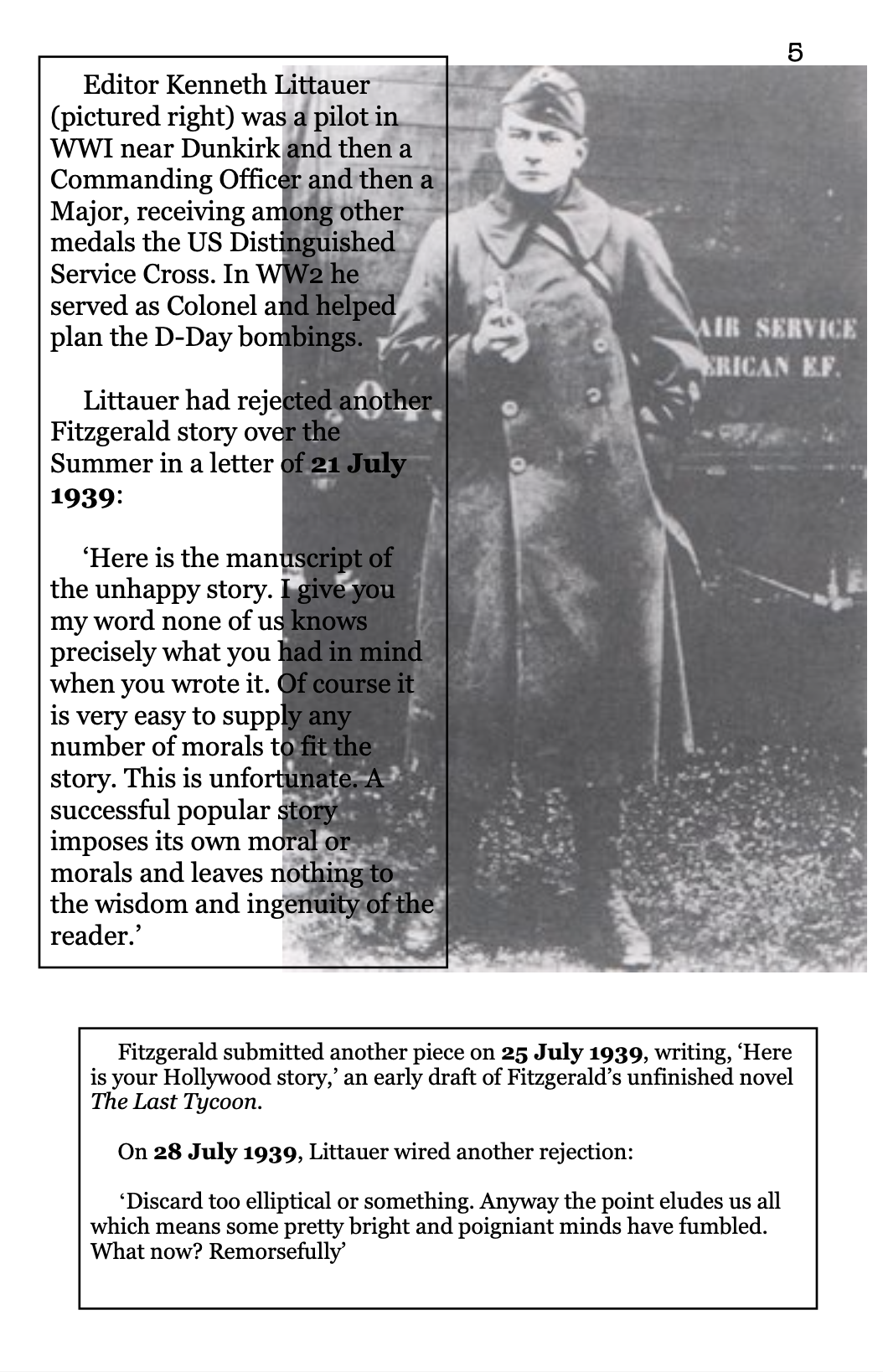
![page 6 picture of Zelda Fitzgerald 27 September 1939
Fitzgerald writes to Dr. Suitt, at Zelda’s sanatorium in North Carolina:
‘As you know I tried to give Zelda every luxury permissable when I could afford it (the trip to Florida, etc) but it is simply impossible to pay anything, even in instal[l]ments when one drives in a mortgaged Ford and tries to get over the habit of looking into a handkerchief for blood when talking to a producer. ‘If things go as bad as they have for another month, the hospital can reimburse itself out of life insurance. This is a promise.’ He would be dead in 15 months. 2 October 1939
Fitzgerald receives a letter from Harold Ober:
‘Cosmopolitan has returned “Director’s Special” with the following letter:
“It’s really heart-breaking to return a Scott Fitzgerald story. I think everybody in our kind of work today really gets a thrill from seeing that name in print or on a manuscript. I read “Director’s Special” with the highest hope and was terribly disappointed that I could not whole-heartedly recommend it. That opinion seemed to be general here, I regret to say.’](https://www.handoutzine.com/wp-content/uploads/2023/11/6.png)
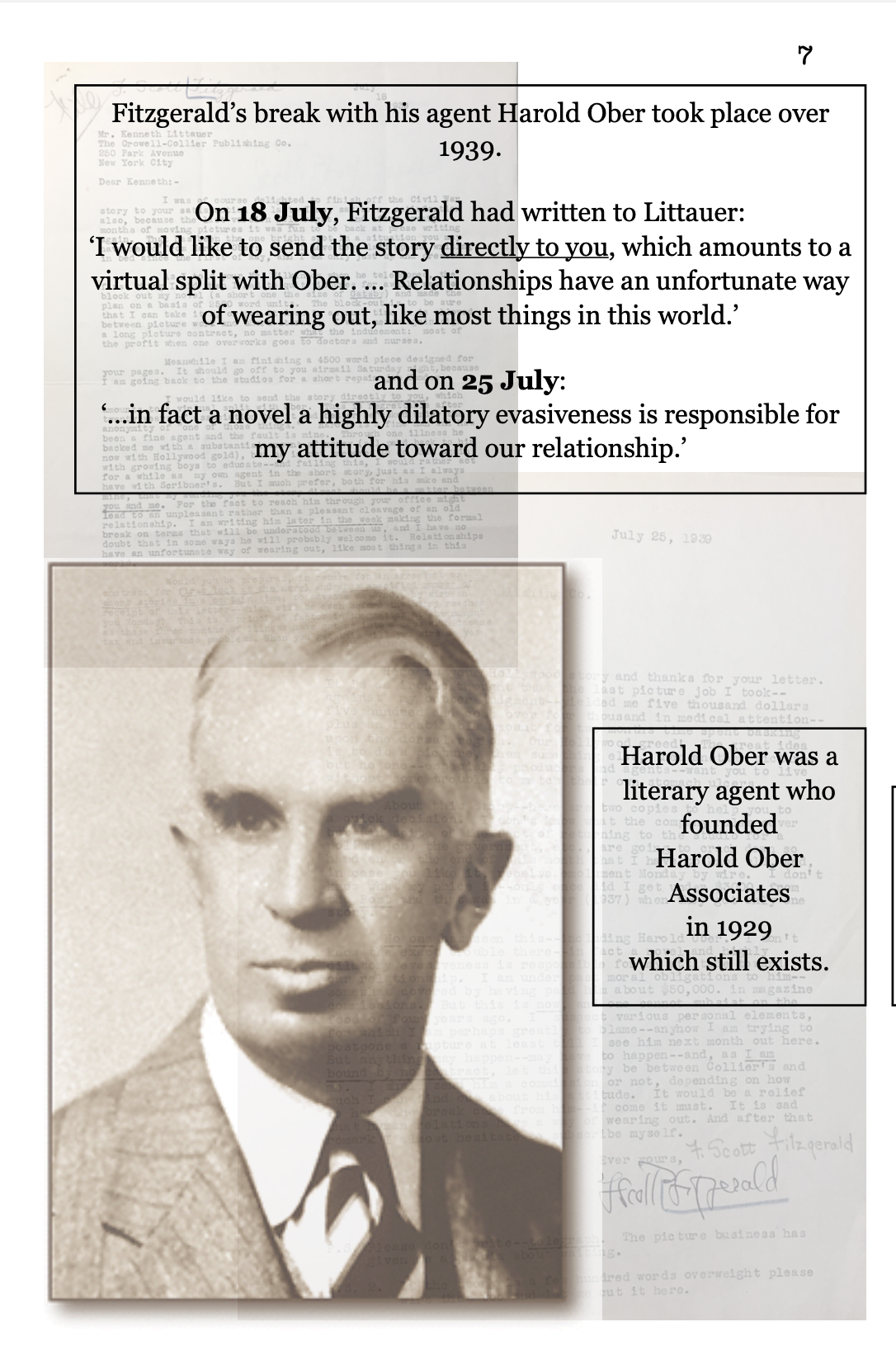
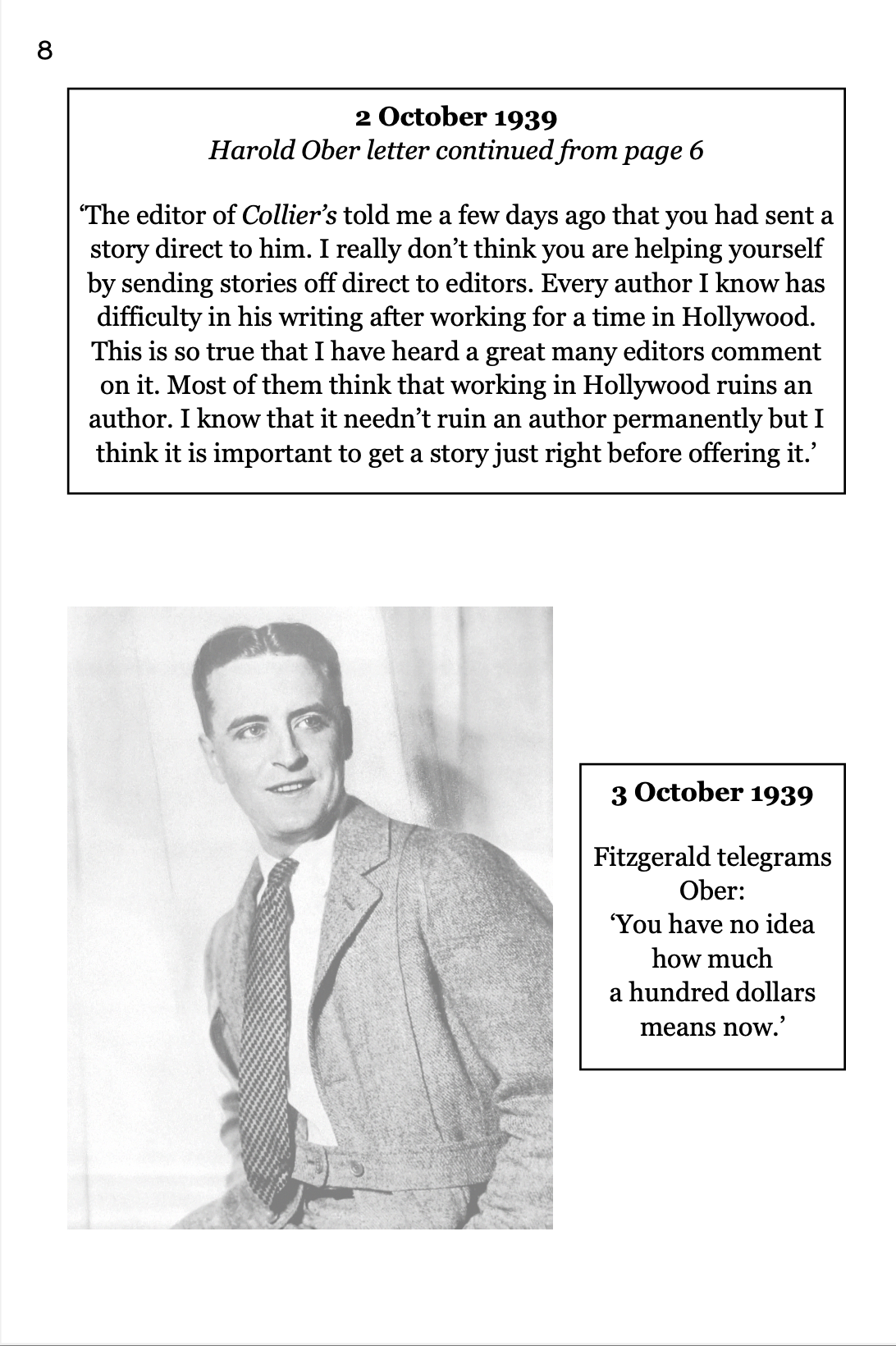
![page 9 photographs of F. Scott Fitzgerald, Zelda Fitzgerald, their child 4 October 1939 Fitzgerald responds to Ober’s letter:
‘I sent the stories to Collier’s for the simple reason that it seemed difficult to deal with someone who treats you with dead silence. Against silence you can do nothing but fret and wonder.’
then
‘Anyhow I have “lived dangerously” and I may quite possibly have to pay for it, but there are plenty of other people to tell me that and it doesn’t seem as if it should be you.’
and a PS
‘Could you mail me back these stories? I have no copies. Don’t you agree that they are worth more than $250? One of them was offered to Collier’s in desperation - the first Pat Hobby story but Littauer wired that it “wasn’t a story.” Who’s right?’ 6 October 1939 Fitzgerald writes to Zelda:
‘…work has been difficult. I am almost penniless… You will remember it took me an average of six weeks to get the mood of a Saturday Evening Post story.’
closing with
‘Your life has been a disappointment, as mine has been too. But we haven’t gone through this sweat for nothing. Scottie [pictured at bottom] has got to survive and this is the most important year of her life.’](https://www.handoutzine.com/wp-content/uploads/2023/11/9.png)
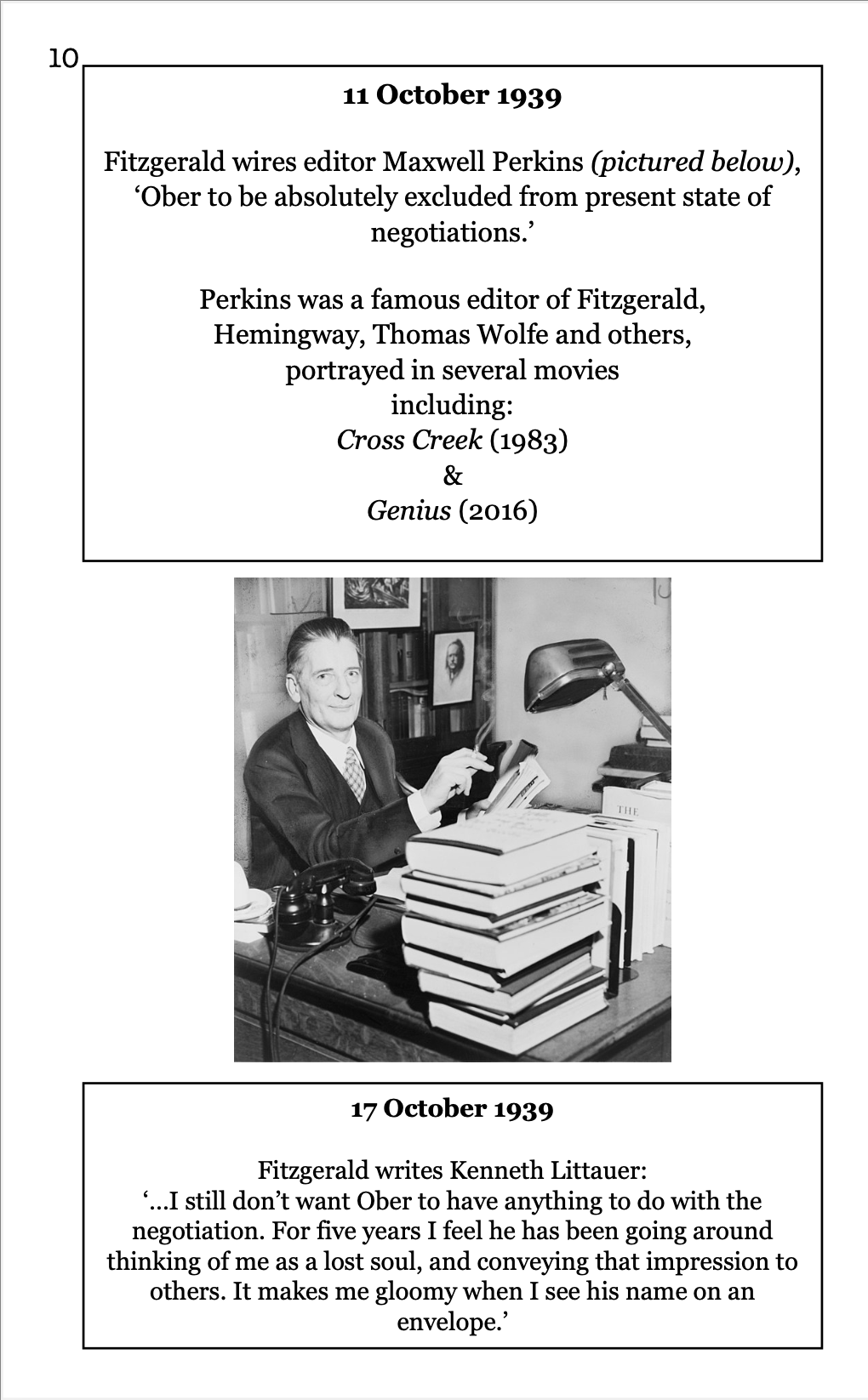
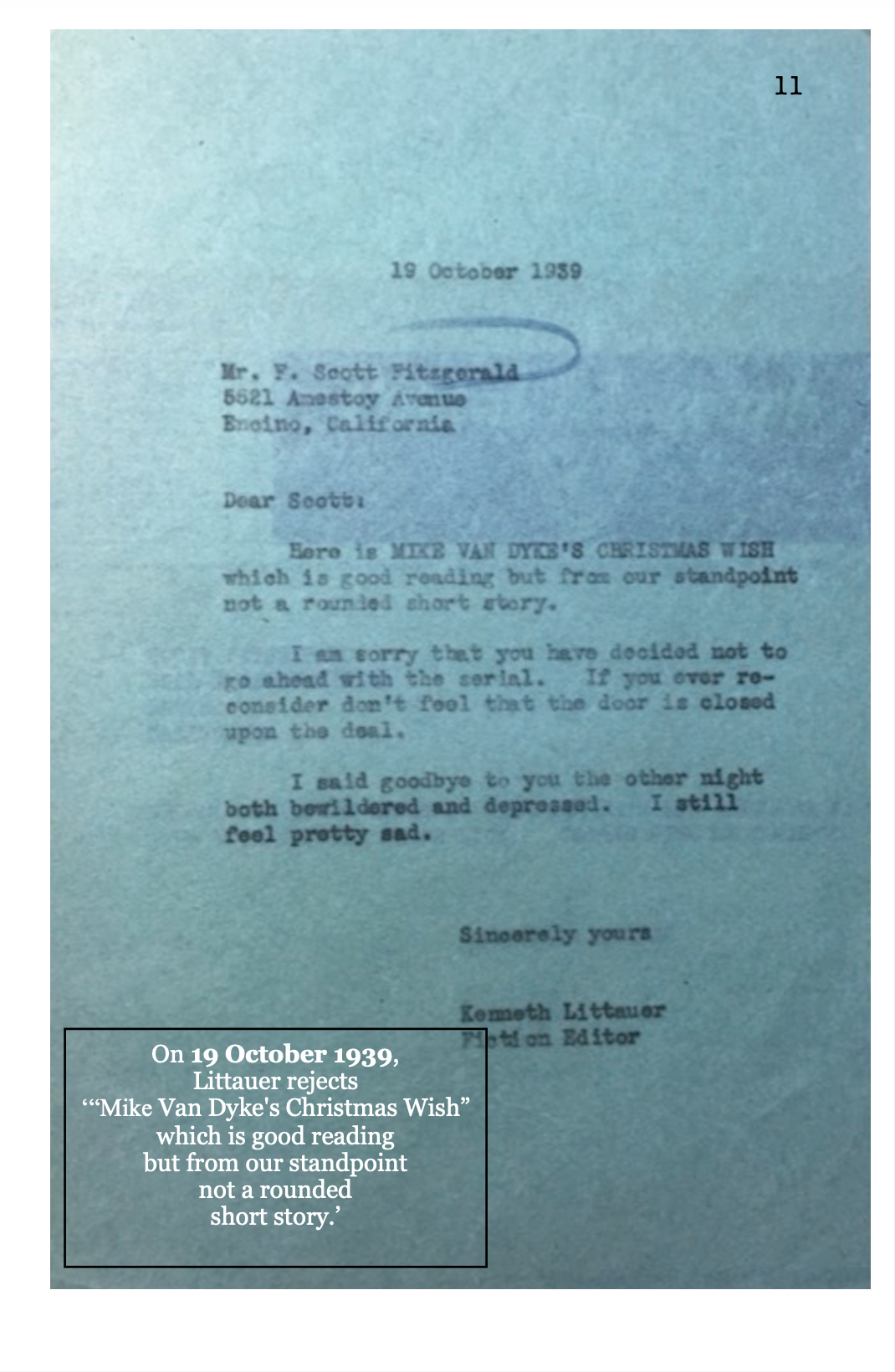

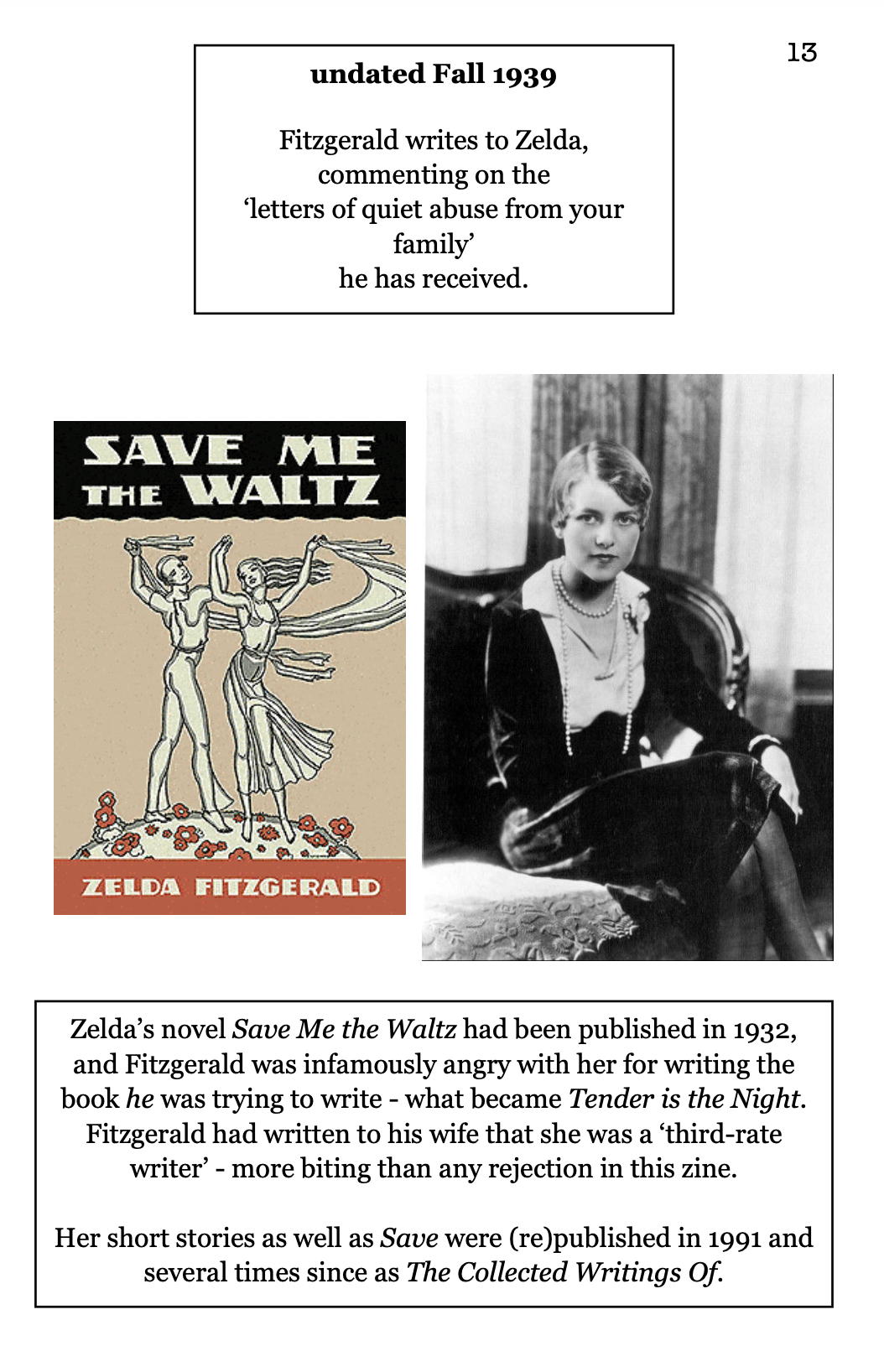
![page 14 title "F-Stop Fitzgerald" image of 6 F-stops, from photography, labelled 1.4, 2, 2.8, 4, 5.6, 8. inside each white circle is text from Fitzgerald's "The Last Tycoon": He asked her to
sit close in the car,
and she did, but they did not seem close, because for that you have to seem to be growing closer. picture of Otis A. Kline, middle-aged white man piicture of Kline's book "Planet of Peril" picture of George Latimer, older white man George Lorimer (page 16) was a journalist and famous editor of the Saturday Evening Post, described in his NYTimes obituary as a ‘strong foe of the New Deal’ (although he ‘discovered’ socialist writer Jack London). ‘As an ardent apostle of Big Business and the middle class, he guided what the late Will Rogers once called “America’s biggest nickelodeon” from 1899 to 1937, and in that period built its circulation to phenomenal heights and its profits to an equally lofty level.’ ‘Mr. Lorimer made a big business of the craft of writing. He found those who could manufacture for him the serials, short stories and articles which he instinctively knew would appeal to millions of Americans and paid them extraordinarily well.’ ‘Critics … charged him with doing business in mediocrity, pandering to the escapism dormant in most people, [and] failing to accept the facts of life.’ Otis A. Kline (page 4) was a songwriter, adventure novelist, and literary agent who worked at Collier’s at this time.](https://www.handoutzine.com/wp-content/uploads/2023/11/14.png)